
Mindfulness Activities for Seniors to Reduce Stress and Support Brain Health

In today’s fast-paced world, finding moments of calm is essential at any age—but especially for older adults seeking balance, relaxation, and cognitive wellness. Mindfulness activities for seniors offer a simple yet powerful way to reduce stress, enhance emotional well-being, and support long-term brain health.
At Westminster Place, a Life Plan Community in Evanston, IL, residents are surrounded by a serene, beautifully landscaped campus filled with fountains, mature trees, and peaceful gardens—creating the perfect setting to slow down, reflect, and be present. Whether enjoying a quiet walk outdoors or participating in guided wellness programs, mindfulness becomes a natural part of daily life.
Explore how mindfulness supports stress relief, emotional balance, and brain health for older adults. You’ll learn why these practices matter, discover simple exercises to try, and see how incorporating mindfulness into daily routines can enhance overall well-being—whether in independent living or memory care.
Why Mindfulness Matters for Older Adults
Mindfulness is the practice of staying present and fully engaged in the moment. While it may sound simple, its impact can be profound—especially for seniors. As individuals age, they may face changes in health, daily routines, or social connections.
Mindful aging practices help create a sense of stability, calm, and control, supporting both emotional and cognitive wellness. Meditation for elderly individuals, breathing exercises for older adults, and other stress-relief techniques for seniors can positively impact overall health. Benefits of mindfulness include:
- Reduced Stress and Anxiety: Mindfulness helps calm the nervous system and lowers stress hormones.
- Improved Focus and Memory: Regular practice may support cognitive function and mental clarity.
- Enhanced Emotional Balance: Mindfulness encourages awareness and acceptance of emotions.
- Better Sleep Quality: Relaxation techniques can help seniors fall asleep more easily.
- Support for Brain Health: Engaging in consistent mindfulness practices may contribute to long-term cognitive wellness.
For residents in independent living, daily mindfulness for retirees can provide structure and intention. Practices like gratitude journaling, guided meditation, visualization strategies, and physical exercises help create a more focused, energized, and fulfilling lifestyle. These activities also promote a sense of empowerment while encouraging self-care.
In memory care settings, mindfulness can be especially beneficial. Simple, repetitive activities—such as guided meditation for seniors or breathing exercises for elderly individuals—can help reduce agitation, ease anxiety, and create a comforting daily rhythm. These practices foster emotional security while supporting cognitive engagement in a gentle, approachable way.
At Westminster Place, the peaceful surroundings further enhance these benefits. The natural beauty of the campus—complete with lush gardens, shaded walkways, and tranquil fountains—offers a calming environment where residents can naturally engage in mindfulness throughout the day.
Top Mindfulness Exercises for Seniors
Incorporating mindfulness into daily life doesn’t require extensive training or complicated routines. In fact, some of the most effective mindfulness activities for seniors are simple, accessible, and easy to adapt to different ability levels.
Breathing and Meditation
Breathing exercises and meditation are foundational mindfulness practices that can be done anytime, anywhere. These techniques are especially helpful for managing stress and promoting relaxation.
- Breathing Exercises for Older Adults: Controlled breathing helps slow the heart rate and relax the body. A simple technique is the “4-4-4” method: Inhale for four seconds, hold for four seconds, and exhale for four seconds. Repeating this cycle several times can create an immediate sense of calm.
- Guided Meditation for Seniors: Listening to guided meditation for aging adults can help maintain focus and provide structure. These sessions often include calming imagery, gentle instructions, and soothing sounds to encourage relaxation.
- Visualization Exercises: Imagining a peaceful setting—like sitting beside a fountain or walking through a quiet garden—can reduce stress and promote emotional balance.
- Gratitude Practices: Reflecting on positive moments each day helps shift focus away from stress and toward appreciation, improving overall mood.
At Westminster Place, residents can enhance these practices by spending time outdoors, where the sights and sounds of nature naturally encourage mindfulness. Sitting near a fountain or under a shaded tree can turn a simple breathing exercise into a deeply restorative experience.
Gentle Movement and Stretching
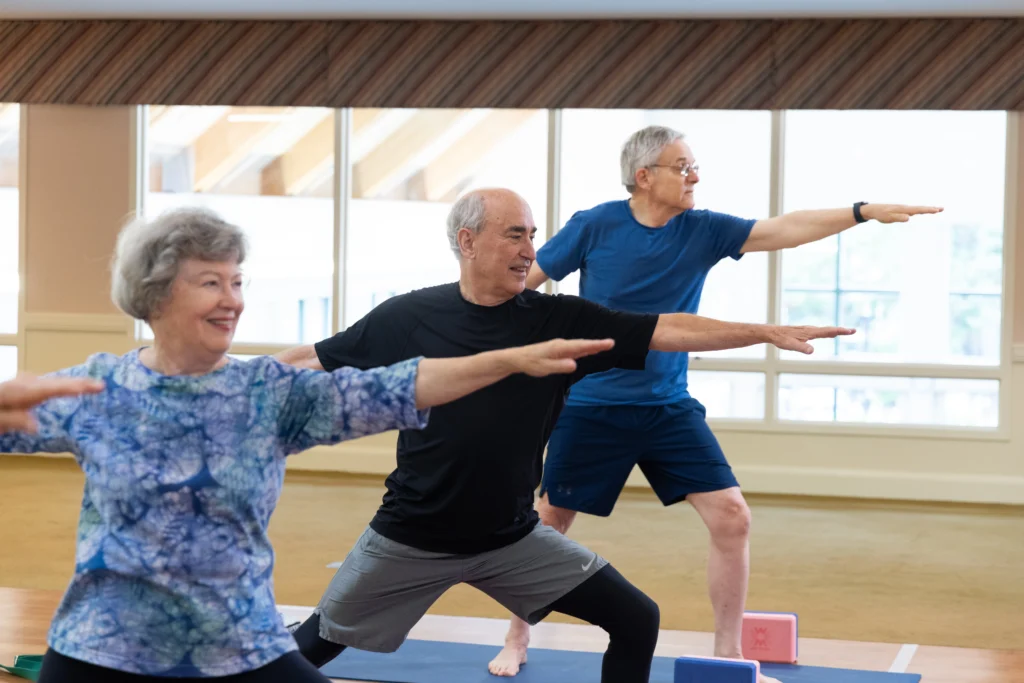
Mindfulness isn’t limited to stillness—it can also be practiced through movement. Gentle physical activity helps seniors connect with their bodies while improving flexibility, balance, and overall well-being.
- Chair Yoga for Seniors: Chair yoga offers a safe, accessible way to experience the benefits of yoga for senior mental health. It combines gentle stretching, breathing, and mindfulness to support both physical and emotional wellness.
- Light Stretching: Daily stretching helps release tension, improve circulation, and promote relaxation.
- Nature Walks for Mindfulness: Walking through natural surroundings encourages awareness of the present moment. Noticing the rustling leaves, fresh air, and changing scenery can be incredibly grounding.
- Art Therapy for Seniors: Creative expression through painting, drawing, or crafting allows seniors to focus their attention, reduce stress, and stay mentally engaged.
The beautifully landscaped campus at Westminster Place provides an ideal setting for these activities. Residents can enjoy leisurely walks along garden paths, participate in outdoor stretching, or simply take in the calming environment—making mindfulness feel both natural and enjoyable.
Incorporating Mindfulness into Daily Life
The key to experiencing the benefits of mindfulness is consistency. Fortunately, incorporating mindfulness into daily routines can be simple and flexible. Small, intentional practices throughout the day can have a lasting impact on overall wellness.
- Mindful Eating Tips: Taking time to savor meals—focusing on flavors, textures, and aromas—can transform everyday dining into a mindful experience.
- Short Meditation Breaks: Pausing for just a few minutes to breathe and reset can reduce stress and improve focus.
- Journaling Prompts for Older Adults: Writing about thoughts, memories, or daily experiences supports emotional expression and cognitive function.
- Memory Recall Games: Engaging in storytelling or reminiscing activities can stimulate the brain and support memory.
- Evening Relaxation Routines: Gentle breathing or guided meditation before bed can promote better sleep and help seniors unwind.
Creating a routine that incorporates these stress relief techniques for seniors helps establish a sense of rhythm and stability. Over time, these small practices become second nature, contributing to a more balanced and fulfilling lifestyle.
At Westminster Place, mindfulness is seamlessly integrated into daily life through thoughtfully designed programs and supportive services. Residents in both independent living and memory care benefit from structured routines, engaging activities, and opportunities for social connection—all of which contribute to emotional well-being and cognitive health.
The community’s tranquil setting further enhances these experiences. Whether enjoying a quiet moment in the garden, participating in a wellness class, or connecting with neighbors, residents are encouraged to embrace mindfulness in ways that feel natural and meaningful.
Experience Mindful Living at Westminster Place
At Westminster Place, wellness is more than a goal—it’s part of everyday life. From calming routines to meaningful engagement, our community supports older adults in both independent living and memory care with the structure, connection, and compassionate care they deserve. Here, mindfulness is not just an activity—it’s a way of life supported by beautiful surroundings, enriching programs, and a vibrant community.
Contact Westminster Place today to learn more or schedule a visit and see how our supportive lifestyle helps residents feel calmer, more confident, and more present each day.